
An AI analyst that already knows how your business counts things.
Data Agents use your team’s knowledge layer metrics, rules, gotchas, and proven queries to deliver accurate answers
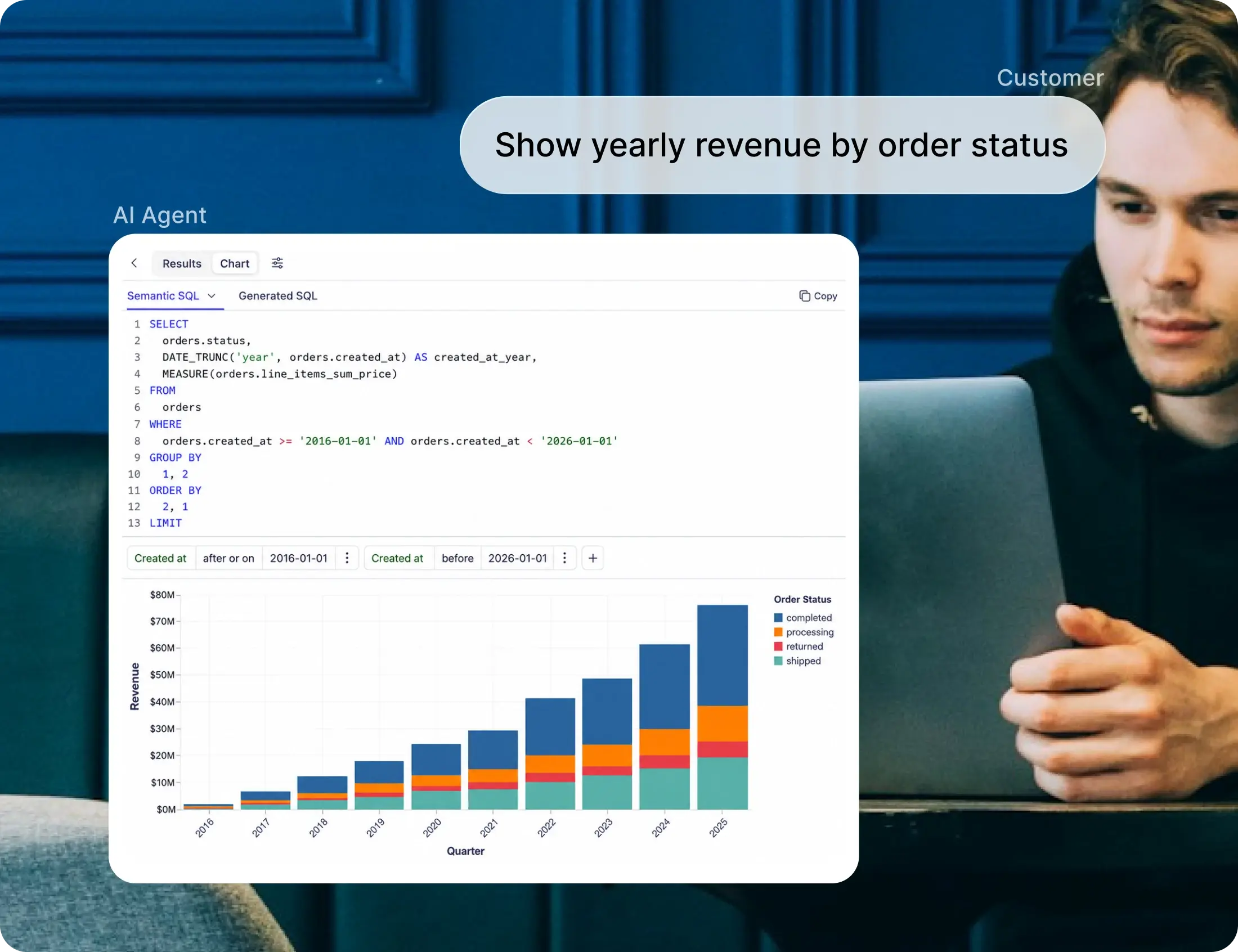




















The problem
"AI on your data" usually means AI guessing at your data.
Every model reinvents the query.
Ask the same question twice, get two different SQL statements — and sometimes two different answers.
Reinvented every timeResolved once, reused every timeSchema isn't context.
A model can see your tables. It can't see that refunds should subtract from revenue, or that test accounts need excluding.
Column namesThe rules your team actually usesSame mistake, every new question.
Time zone mismatches, canceled orders counted as sales — teams write corrections into Slack threads, not into the tool.
Tribal knowledge in SlackWritten once, applied every timeNobody trusts the first answer.
So someone re-runs it in the warehouse to check. The AI didn't save time, it added a step.
Answer, then verifyAnswer, already verifiedAccess gets rebuilt for every new tool.
Your org already has roles, row rules, and column masks defined somewhere. A new AI tool rarely inherits that logic.
Rebuilt per toolInherited from the access model you already have- FIX
One knowledge layer. Every question resolved against it.
Scroll down — this is what you define once, and never explain again.
The agent doesn't figure this out on its own. You tell it once.
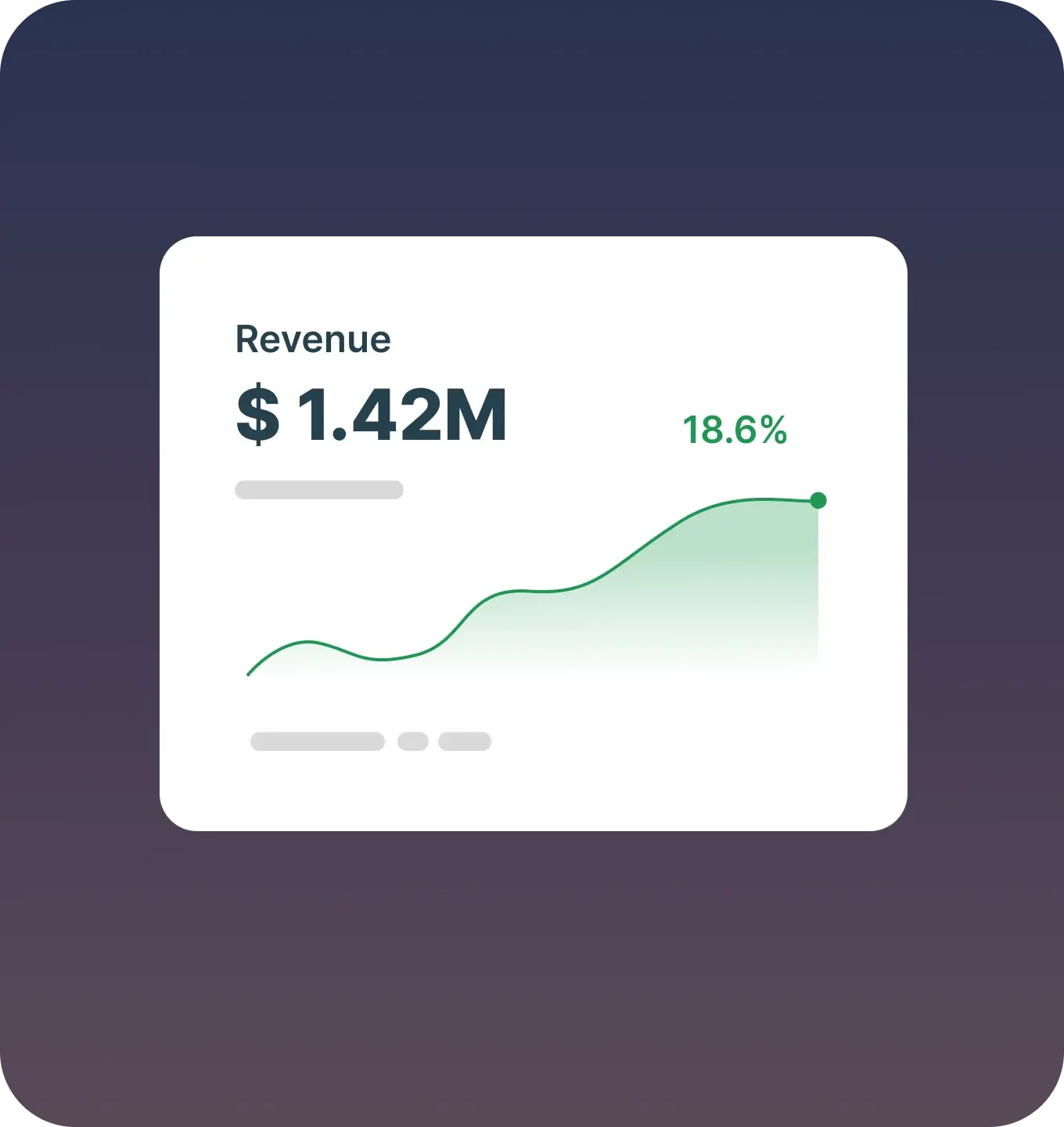 Defined once
01/ Metrics
Your business's own definition, not a generic one
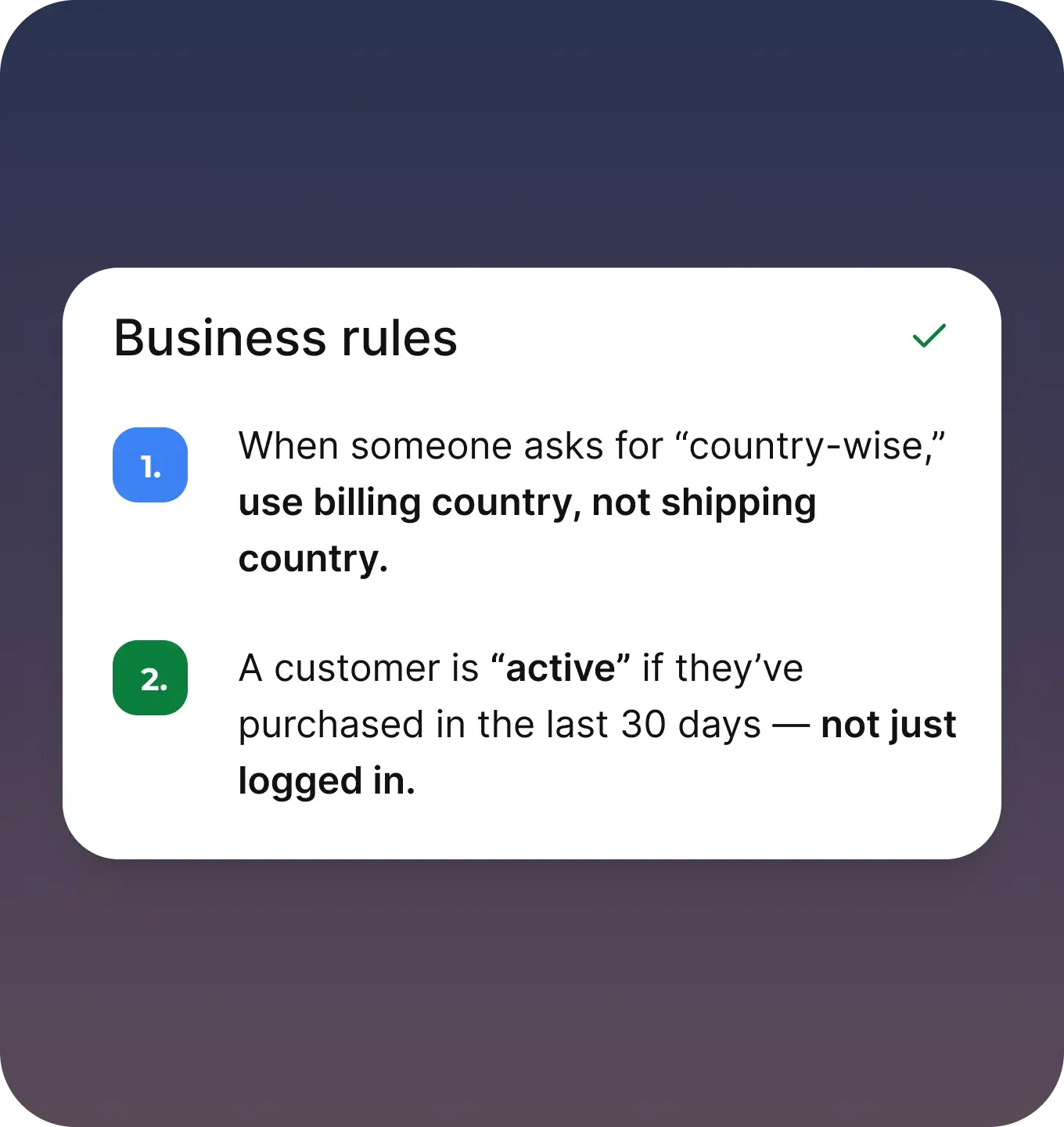 Team’s shorthand
02/ Business rules
What your team actually means when they ask
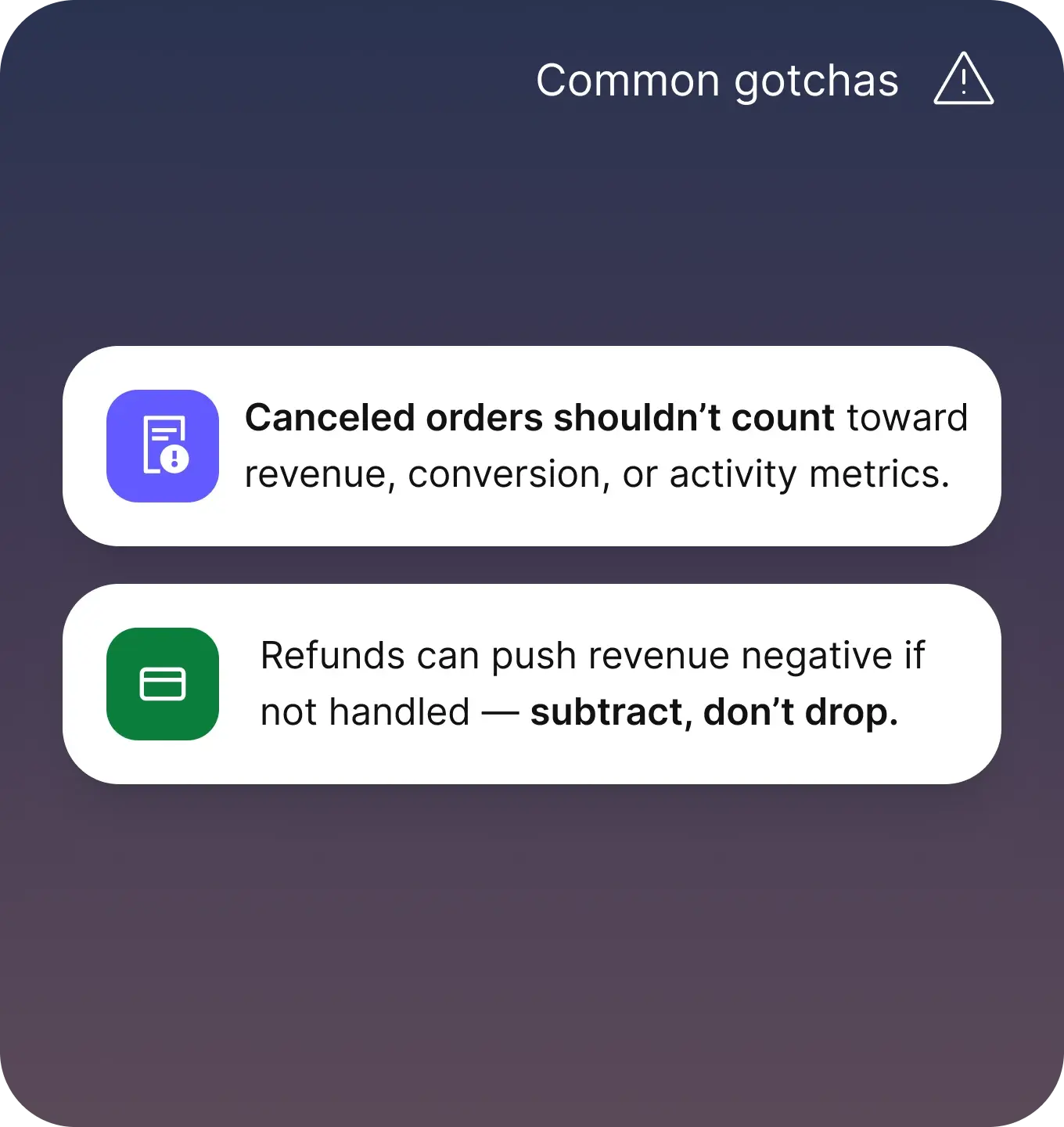 Won’t repeat
03 / Common Gotchas
The mistakes it won't make twice
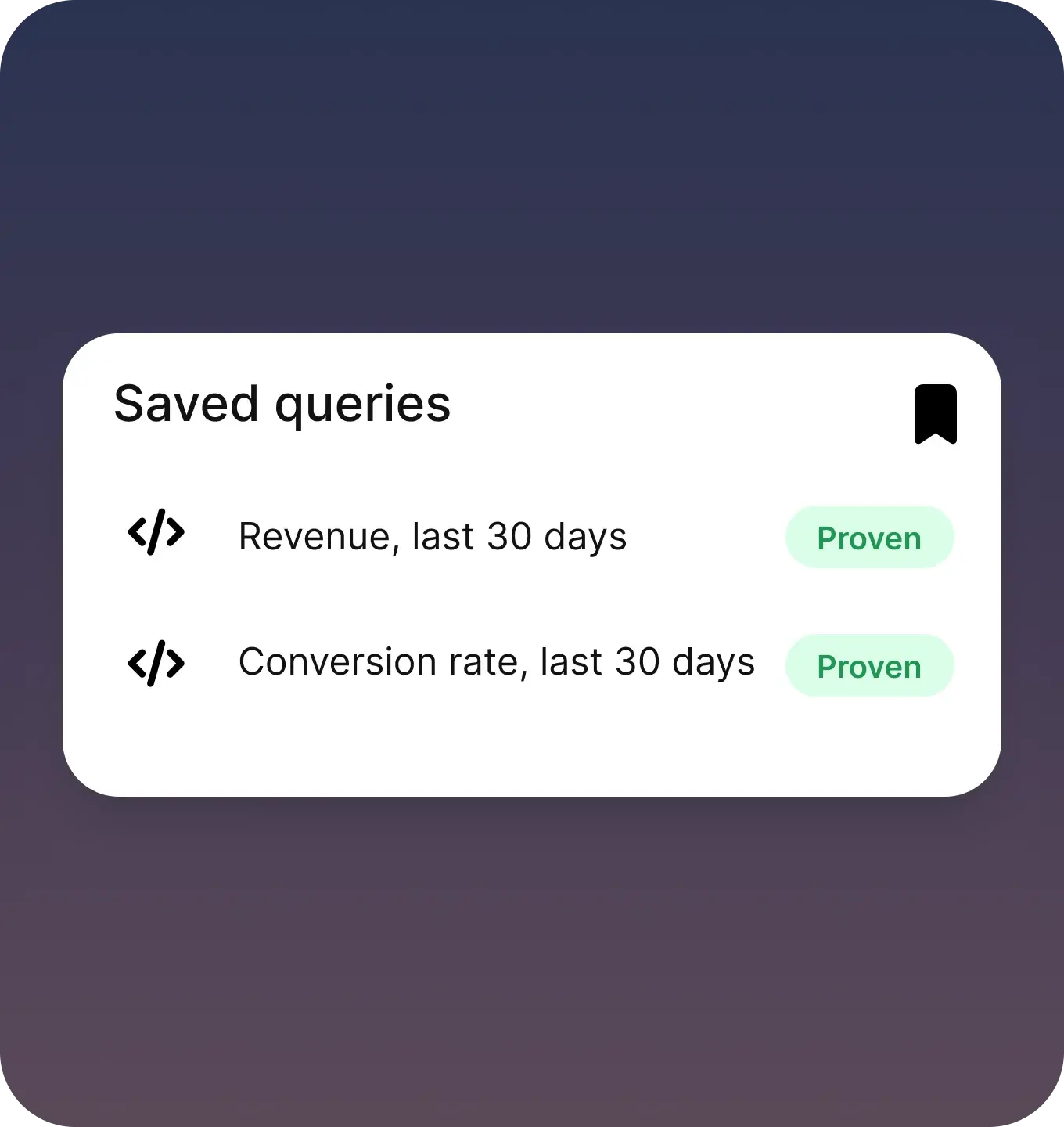 Instant reuse
04/ Proven queries
Don't regenerate what already works, no re-derivation risk.
Ask Business Questions.
Get Trusted Answers.
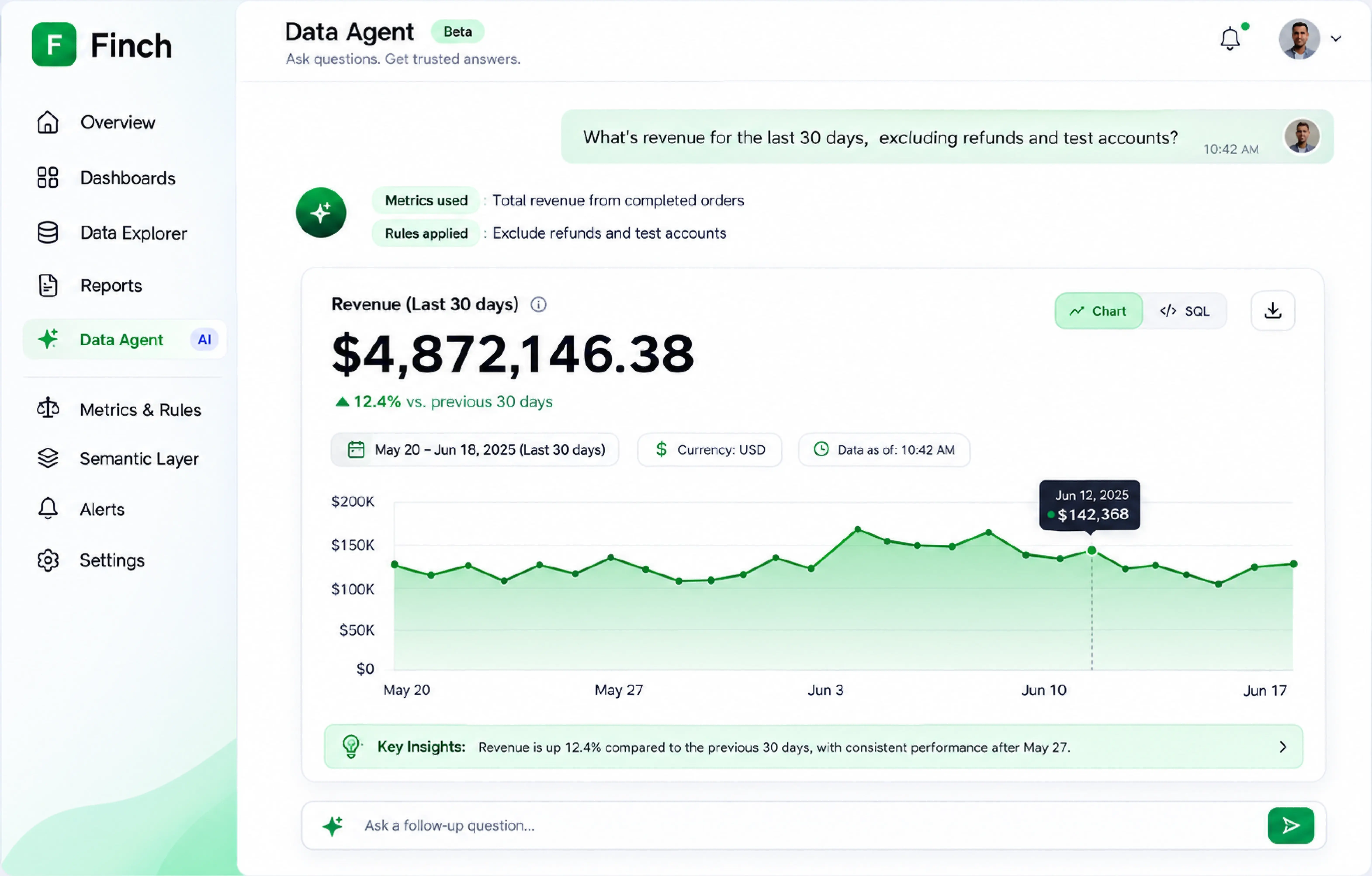
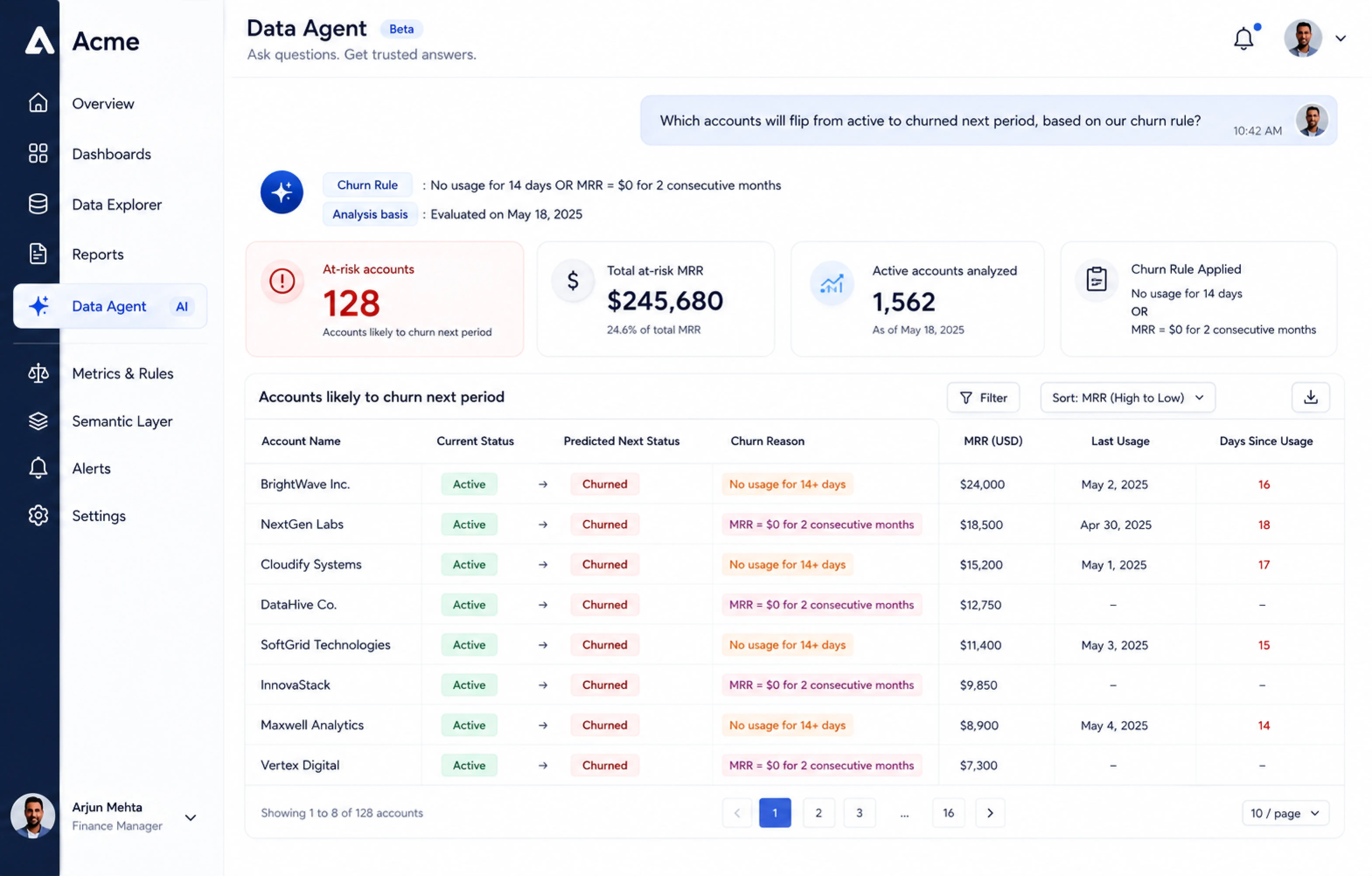
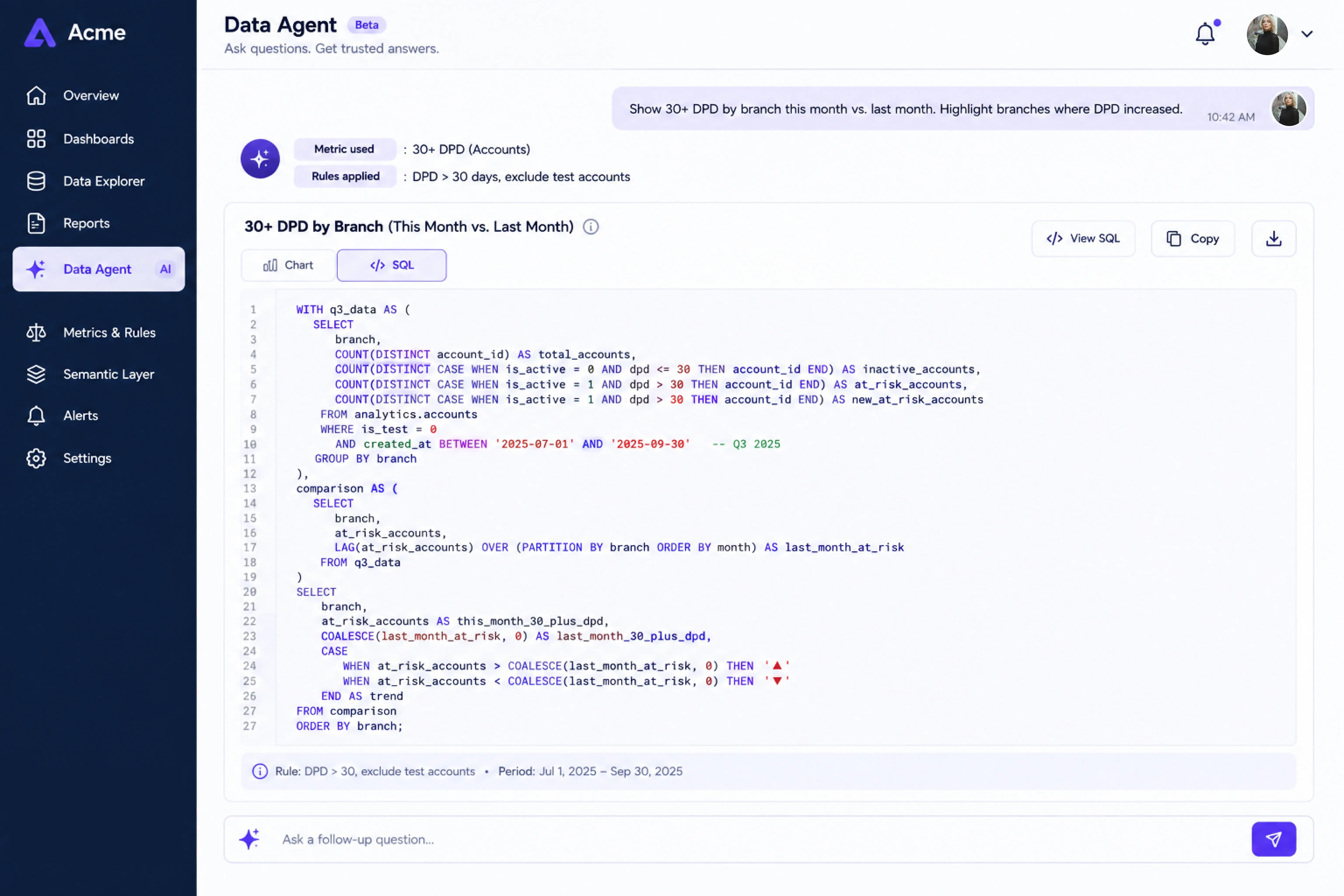
Data Agents turn everyday business questions into answers you can trust—with the metric, business rule, gotchas, and underlying query shown alongside every result.
Access control
Scoped by design,
not bolted on.
Every metric, rule, and query still runs inside your permission model. Role-based access, row-level security, and column-level restrictions are enforced before a query executes — not filtered out of the answer afterward. Two people can ask the identical question and get answers scoped to what each is cleared to see.


- Role-based access
- Row-level security
- Column-level masking
- Full audit trail


Built to fit right in with your stack
- PostgreSQL
- Mongodb
- Snowflake
- Hubspot
- MySQL
- Salesforce
- Graphql
- 5000+ more
Bring one question your team gets asked every week.
We’ll show you the metric definition, the rules applied, and the answer — live, against your data.